

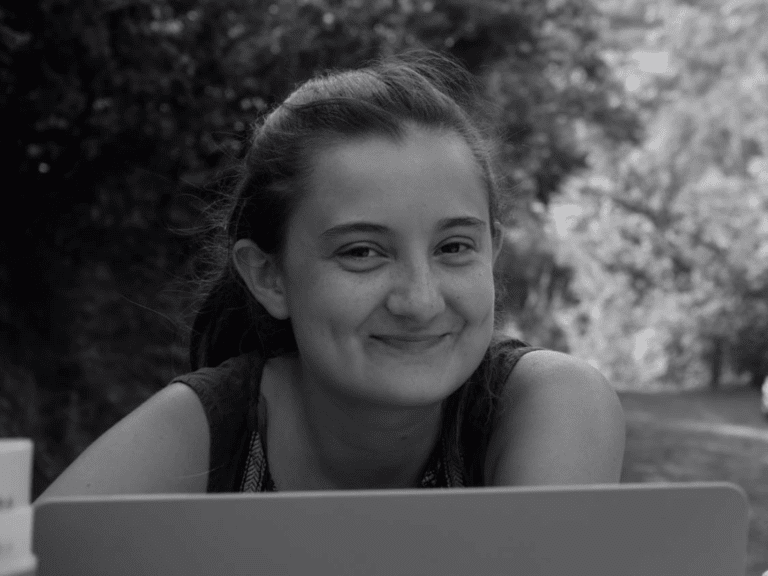


Things kind of just happened for PhD student Luna Valentin.
Born and raised in a family of farmers in Saint-Étienne, France, life was simple. She started playing music at 7, and started spelunking at 11. Spelunking, for the uninitiated, is the exploration of cave systems.
When it came time to choose an undergraduate degree, Valentin went with a double major — music and physics — at Lycée Léonard de Vinci.
How spelunking led to academic research
“I didn’t know what to choose, so I just did both,” Valentin says about her double major. “I was still spelunking when I was pursuing a Master’s degree in Musicology research. I started researching more into caves because of my spelunking hobby.”
It was then that her professor introduced her to a couple of Stanford University researchers who were heading over to France to study the Chauvet Cave and its prehistoric paintings.
“I was able to connect with them through my love of spelunking and even accompany the researchers to test out some of the equipment before heading off to the site,” Valentin shares. “It was important to test it out as the cave itself is a UNESCO site.”
Valentin found their research so interesting that she became a part of the team. It was then she learnt about how Stanford supported their researchers — a large research budget and advanced equipment.
The researchers proposed that she apply for a PhD at Stanford. She didn’t really think much about it at first. Besides, if she did end up attending Stanford, Valentin would be the first in her family to pursue a PhD and a degree abroad.
She stuck with applying for PhD programmes back home. However, there was a problem — there were no good PhD programmes in archaeoacoustics.
“If I were to pursue a PhD in France, especially in the field I want, I would have to wait for a year and a half to get into a programme,” says Valentin. “And even if I were to get in, I was sure there wouldn’t be any research that would fit my interests.”
So, Valentin took a leap of faith and applied to Stanford. And she got in.
Today, she’s in the third year of her PhD in Archaeoacoustics at the Centre of Computer Research in Music and Acoustics (CCRMA) at Stanford.
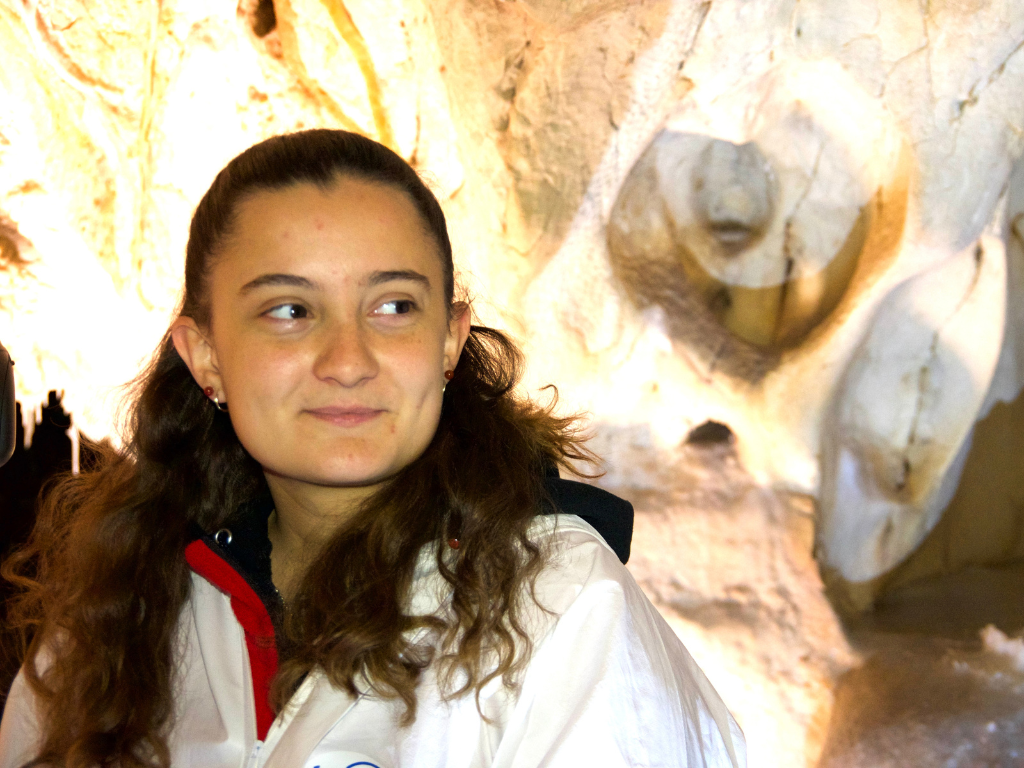
Valentin’s research lies at the intersection of acoustics, audio technologies, and music composition, working on reconstructing the soundscapes of the past to better understand the impact of sound on human experience in various environments, ranging from natural caves to sacred structures. Source: Luna Valentin
The difference between studying in France and the US
The US is the land of dreams for many. International students have been choosing the US as their top study destination. In fact, the US hosted over 1.1 million (1,126,690) international students in 2023/2024.
In France, however, only 430,466 international students attended higher education, 61.79% fewer than in the US.
But studying in the US for Valentin was a strategic decision, rather than chasing a dream.
When it comes to her programme, it’s a little bit of a hit and miss, but Valentin has found a way to balance it out.
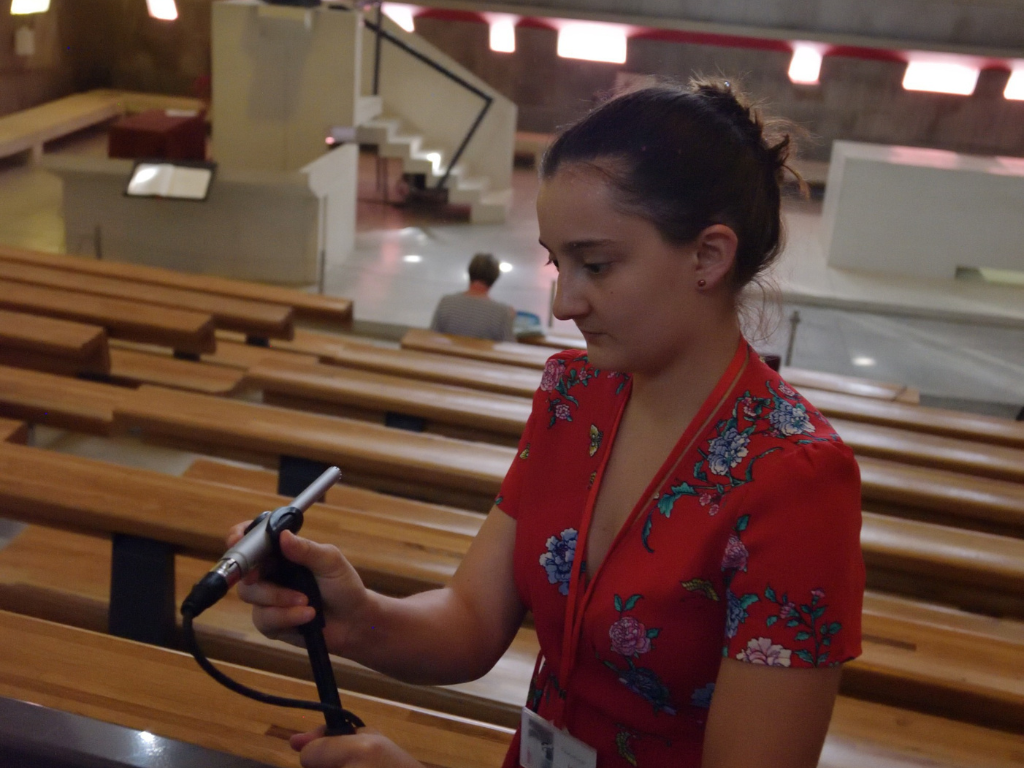
Valentin pursued a BS in Engineering Sciences at Lycée Léonard de Vinci. She later completed two Master’s in Musicology Research at the Université Jean Monnet Saint-Etienne. Source: Luna Valentin
“In France, you’ll divide your work between your cohorts with the idea of embracing a work-life balance; however, the work-life balance is slightly cut off because you’re living on campus with your professors and cohorts 24/7,” she explains.
Instead of seeing it as a negative, Valentin is taking it as an immersive experience.
Another hit and miss is the guidance offered during the programme.
“In France, you’ll be given a question and then trained to answer the question,” Valentin shares. “You’ll be under the guidance of an older researcher who will potentially tell you what to do.”
In the US, however, that isn’t the case. You’ll 100% have the freedom of choosing your own question and how you’re going to conduct your research.
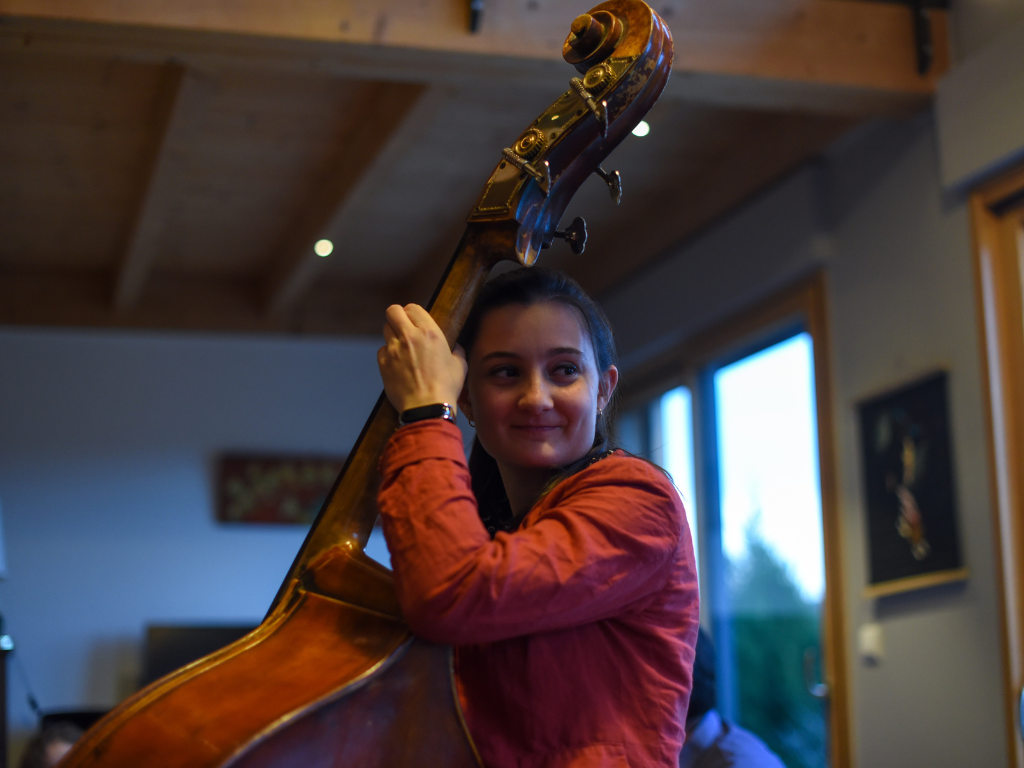
Other than spelunking, Valentin plays the double bass. Source: Luna Valentin
“If I no longer want to research cave acoustics and do something completely different, no one is going to tell me no,” Valentin says. “They’ll tell me to just do my thing.”
She wishes that she had got a little more guidance, as you can get very lost in it all. After all, it’s a five-year programme; there may come a time when she may stray off her topic.
But the best part about studying in the US? The funding.
“Funding and stipends are high at Stanford that it’s enough for me to go back to France to visit my family regularly,” she shares. “I’m not someone who spends a lot, and I don’t have a car, so expenses aren’t that much on that end. I even have enough for rent, even though it’s really high.”
Valentin is expected to complete her PhD in August 2027.