


Husein Pumaya Yakubu has always wanted to work in public policy jobs — even if it wasn’t the most popular programme at university or the most lucrative career option.
While others climbed corporate ladders at the expense of personal passions, Yakubu dug in. Settling for less than meaningful work was never an option.
After earning his BSc in Land Management from the University for Development Studies, one of Ghana’s leading universities, Pumaya joined the Ministry of Lands and Natural Resources as an Emerging Public Leaders Fellow, one of his first public sector jobs that became a turning point in his career as he eventually was promoted to a full-time staff member, a policy analyst.
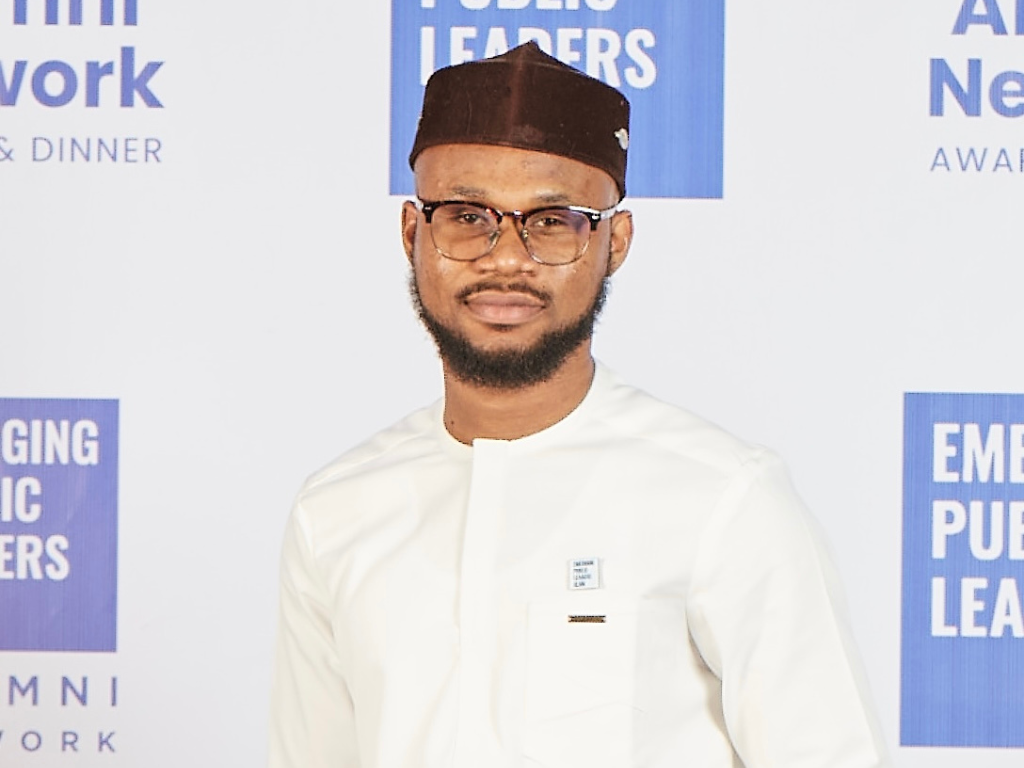
Pumaya completed a BSc in Land Management at the University of Development Studies in Ghana before pursuing his Master’s degree in Canada. Source: Husein Pumaya Yakubu
Feeling stuck in public policy jobs
Pumaya thought he could achieve change immediately. The keyword being “thought.”
“I had these brilliant ideas I wanted to implement, but because I was just starting out in the industry, I did not have the platform to share my thoughts and ideas,” he shares.
“However, it may be different from others. They may have a great boss who cares about your thoughts and ideas; sadly, it doesn’t happen very often.”
He was frustrated but didn’t take this to heart.
“Implementing policy changes is an extremely slow process, but I didn’t let them deter me because I understood that it takes small steps to make a bigger impact,” Pumaya says.
And the way to do it is by pursuing a Master’s in Public Policy.
In August 2024, after working in the ministry for four years, Yakubu jetted to Canada to pursue a Master’s in Public Policy at McGill University on a full scholarship awarded by the Mastercard Foundation.
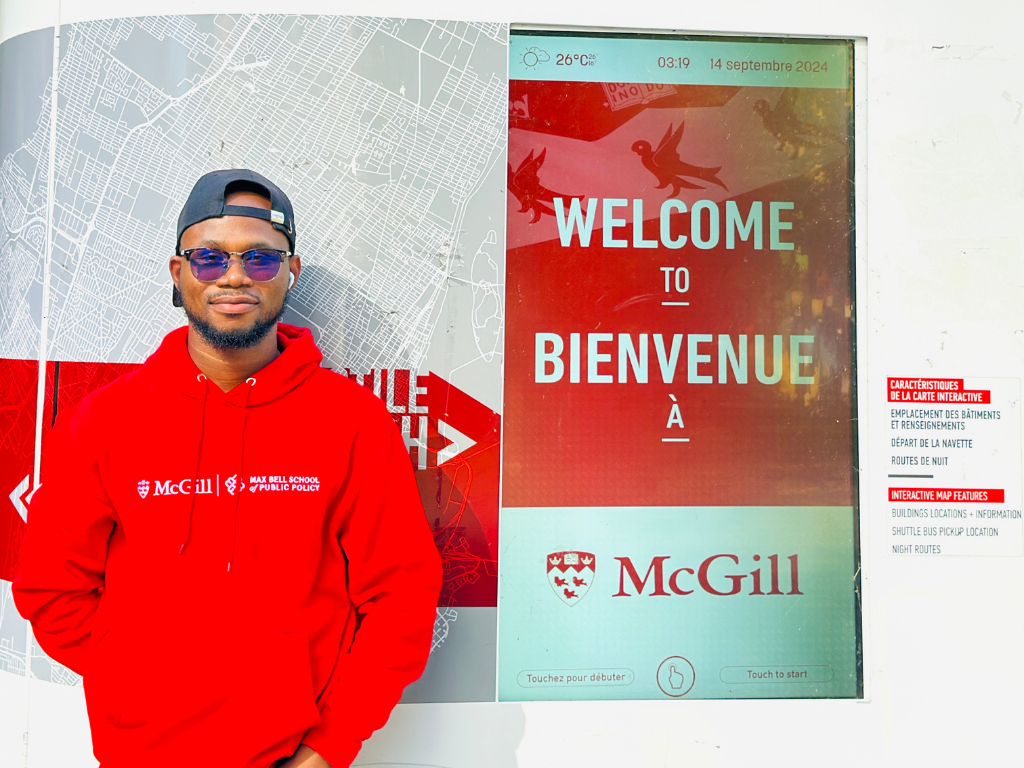
Pumaya has over four years of professional experience in public policy, with expertise in land management, policy analysis, and project coordination. Source: Husein Pumaya Yakubu
Learning from Canada’s history with Indigenous land
Pumaya could have pursued a master’s degree closer to home — an option that would have likely been more convenient, both financially and culturally.
But after spending four years working and collaborating with colleagues in five African countries, he realised that to broaden his perspective and deepen his impact, he needed to look beyond the continent.
“Thanks to the nature of my work and my involvement in the Emerging Public Leaders Alumni Network, I collaborate with professionals across different countries and have learned a lot about how each one manages and preserves its land,” he explains. “But over time, I knew I had to seek knowledge elsewhere to see how things are done differently.”
That curiosity led him to Canada. The country appealed to him not only because McGill’s Master of Public Policy Programme can be completed in just one year, but also because of its unique and complex relationship with the land, particularly Indigenous land.
In Ghana, there are two main types of land: public lands (government-owned and managed lands) and customary lands (land owned by traditional leaders, families, and clans).
A 2023 study reports that approximately 20% of the land in Ghana is held by the government, while customary institutions, private individuals or entities own the remaining 80%.

Pumaya graduated on Oct. 14, 2025, from McGill University. He also completed the Emerging Leaders Programme, winning awards in the McGill Dobson Centre for Entrepreneurship Bootcamp, Cup and Mastercard Foundation Dobson Start-Up Awards, 2025. Source: Husein Pumaya Yakubu
This is in contrast to Canada, where historical and ongoing relationships with Indigenous communities shape land use and governance in distinct ways.
Many Canadian universities actively engage with Indigenous knowledge systems and communities, integrating these perspectives into education, research, and policy-making.

Pumaya is currently a part-time research assistant at the McGill Sustainable Growth Initiative. Source: Husein Pumaya Yakubu
Pumaya was particularly drawn to McGill University, where such engagement is embedded in the curriculum.
“At McGill, there’s a component called the ‘Policy Lab,’ where students get to work on real-world problems posed by Canadian institutions,” he says. “It’s not just about studying in a new place, it’s about being immersed in how another society negotiates land, history, and policy.”
For Pumaya, this was an opportunity to explore how Indigenous and settler communities interact with land in a way that could inform future solutions in their own communities.
“Canada’s experience is not Ghana’s,” he adds, “but there are parallels and lessons, especially around respect for tradition, negotiation, and community involvement, that I believe can help shape better land policy in Ghana.”