

Each year brings new technologies and challenges that redefine modern work, pushing professionals to evolve alongside them. To thrive today, the top three skills you’ll need are analytical thinking, resilience, and creativity, according to the Future of Jobs Report 2025. This shift in the labour market has inspired many professionals, even those with years of experience, to return to school.
One of them is Victoria Popoola. With a BSc in Economics and experience in data analysis, venture capital, and entertainment financing, she decided to join the MA in Economics at Kansas State University. “I joined to further my education, intending to return to industry after,” she recalls.
But her experience at K-State opened new doors. “My decision to move to the PhD programme was motivated by my interest in research and academia, as well as the positive encounters with the Economics department faculty, other graduate students and the K-State community,” she says.
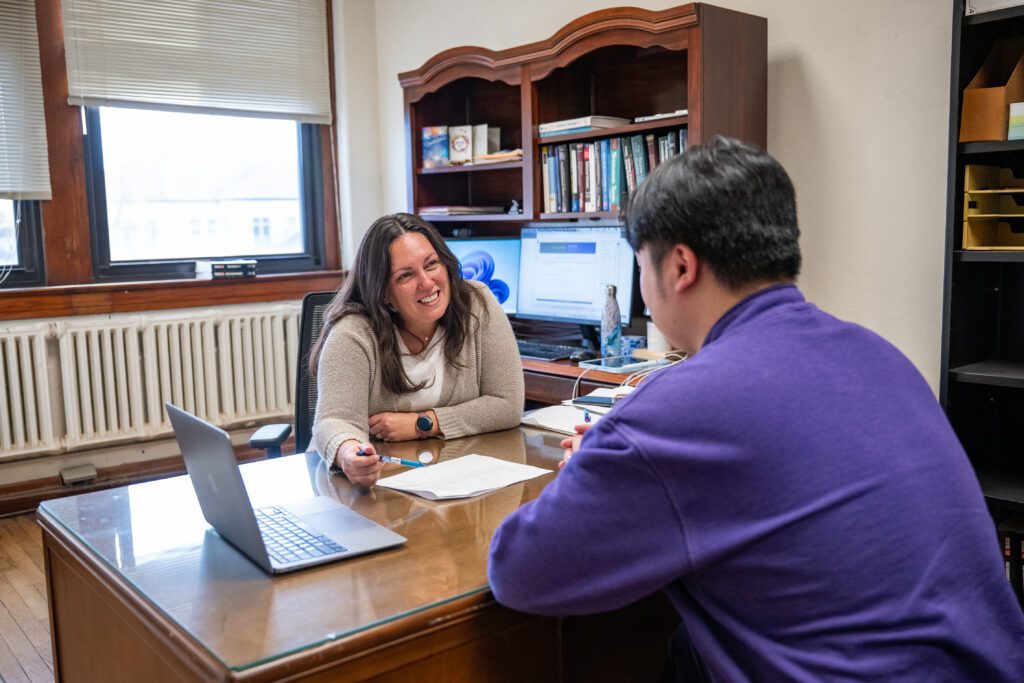
K-State students learn from a world-class faculty of researchers and teachers. Source: Kansas State University
Flexibility that fits your future
At K-State, studying economics is all about understanding how people produce, trade, and use the products that keep our world running. With its MA in Economics, you can design your own path, whether you see yourself in business, government, or research. “I’ve taken courses in micro/macroeconomics, math economics, econometrics and energy market forecasting,” says Popoola.
Staying current is key, stresses Lance Bachmeier, Professor of Economics and Director of Graduate Studies. “Our MA students can take the same courses as PhD students and explore classes across departments. We’ve also recently added courses in empirical sports economics, energy market forecasting, and computational methods using Python,” he shares.
Not every student’s path looks the same and K-State understands that, which is why the MA in Economics has three tracks. Bachmeier breaks it down: “The PhD Preparation track is for students who wish to further strengthen their academic skill set. The Econometrics track serves someone with a background in econometrics and statistics and wants to take their skills to another level by taking PhD-level econometrics, statistics, and machine learning classes. Meanwhile, the Applied Economics track works for anyone else who wants an MA in economics.”
The Applied Economics track is available online. “There is no difference in the content, assignments, or exams when taking an online course. In fact, it’s possible for a student to start the semester online and complete the semester on campus,” Bachmeier adds. “Just keep in mind that a fully online programme limits the availability of classes and may not be right for everyone.”
Plenty happens outside the classroom too. Many students write a thesis or collaborate with faculty mentors on research papers. Some take their learning into the real world through summer internships. The department also hosts a seminar series where scholars from around the country share their work. “The seminars were really helpful,” says Popoola. “They gave me a sense of direction — a kind of ‘destination’ for where I want to go next.”
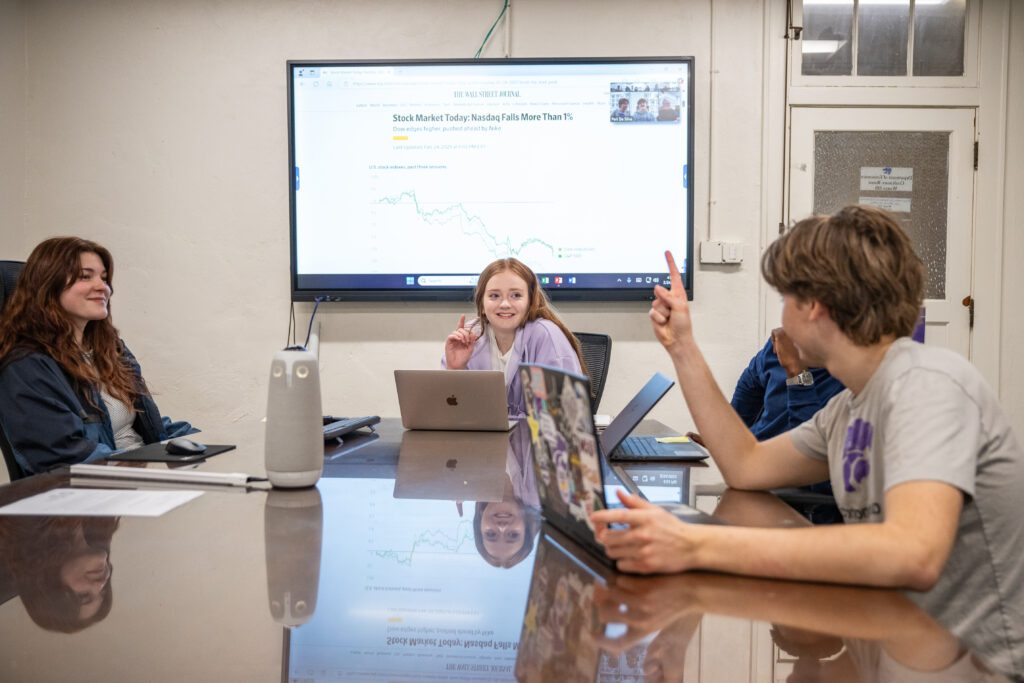
K-State’s diverse community makes campus life richer and helps students develop a broader view of the world. Source: Kansas State University
Finding home far from home
However, returning to academics after a break is easier said than done. “Getting my brain back into learning mode was a bit difficult, but the math and statistics review classes really helped,” Popoola says.
And while she was excited to experience life in a small town for the first time, she initially assumed that she would struggle with the differences, such culture, weather, food, and community. Luckily, that wasn’t the case. “K-State had so many resources to help me navigate living in the US,” she says.
One example is the Morris Multicultural Centre, a hub for intercultural learning and collaborative initiatives. Still, what stood out most to Popoola was the community itself. Recognised as the best in Kansas for student life and value, and among the top 10 US schools for campus food and college dorms, K-State’s welcoming environment helped her find her footing quickly.
Popoola joined the African Students Union (ASU), where she’s now an executive. She feels good to give back to the community that welcomed me. Popoola also found support through Helping International Students, Cat’s Cupboard, and her professors. “Every faculty member I’ve interacted with extensively has been very supportive,” she says.
Set to graduate in Spring 2029, Popoola’s confident that her time at K-State is laying the foundation for her future, whether in academia or industry. Her advice to other international students? “Prepare for the rigour of graduate school. It can be a big adjustment, especially if you’ve been out of school for a while,” she says. “Lean on your faculty, peers and the international community. The support is there, and it makes all the difference.”
Follow Kansas State University on Facebook, X, YouTube, and Instagram